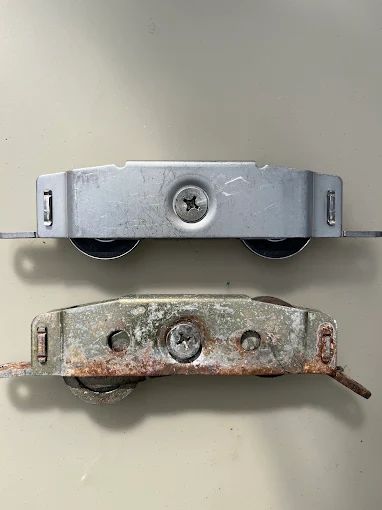
Sliding door rollers are the small wheel assemblies at the bottom of the door that let it glide along the track. When they wear out — flattened wheels, seized bearings, or rust — the door drags, sticks, or grinds. Rollers can almost always be replaced without replacing the door, and it's the single most common sliding door repair. Both rollers should be replaced together, using heavy-duty parts suited to your door's weight.
How sliding door rollers work
Each sliding panel rests on two roller assemblies — one at each bottom corner. Inside each housing are one or two small steel or nylon wheels that ride the track, plus an adjustment screw that raises and lowers that corner of the door. A tandem roller (two wheels per housing) spreads the door's weight and rolls more smoothly, which is why it's the standard choice for heavy glass doors.

Signs your rollers are worn out
- The door drags or takes real effort to slide
- A grinding, scraping, or squealing sound as it moves
- The door has dropped and rubs the track or leaves a gap at the top
- You can feel the door catch in the same spot every time
- Cleaning the track helped only briefly, or not at all
For a symptom-by-symptom breakdown, see the signs your sliding door rollers are worn out.
Can rollers be replaced without replacing the door?
Yes — in nearly every case. The glass panel is lifted out, the old rollers come off the bottom rail, new rollers go in, and the door is reset and adjusted. The door, glass, and frame all stay. Replacing rollers is dramatically cheaper than replacing the door and restores smooth operation.
Should both rollers be replaced together?
Yes. The two rollers wear at a similar rate, so if one has failed the other is usually close behind. Replacing both at once keeps the door level, prevents a repeat visit, and ensures the lock lines up correctly.
Are all sliding door rollers the same?
No. Rollers vary by wheel diameter, housing shape, single vs. tandem design, and load rating. The wrong roller will wear out fast or won't fit the bottom rail. Matching the roller to the door's weight and rail profile is a big part of doing the job right — and why a photo of your old roller helps us bring the correct part.
What roller replacement involves
- Remove the sliding panel (a two-person job for heavy glass)
- Inspect and clean the track, and check for track damage
- Replace both roller assemblies with heavy-duty, corrosion-resistant rollers
- Reset the panel and adjust the height so it's level and latches properly
- Lubricate and test the glide before finishing
Why rollers fail faster in Florida
Salt air corrodes bearings, and blowing sand acts like grinding paste on the wheels and track. Coastal doors often need rollers sooner than the manufacturer's typical lifespan. Upgrading to stainless, sealed rollers and keeping the track clean extends their life — see our maintenance guide.