
Quick answer
You shouldn't use WD-40 as a lasting lubricant on sliding door tracks. WD-40 is primarily a solvent and water-displacer — it evaporates and leaves a residue that attracts sand and grit, which then grinds down your rollers and track. Instead, clean the track and apply a dry PTFE (Teflon) or silicone-based lubricant made for door hardware.
Why WD-40 is the wrong choice
- It's a solvent/water-displacer, not a durable lubricant — the effect is short-lived
- Its oily residue attracts sand, dust, and pet hair
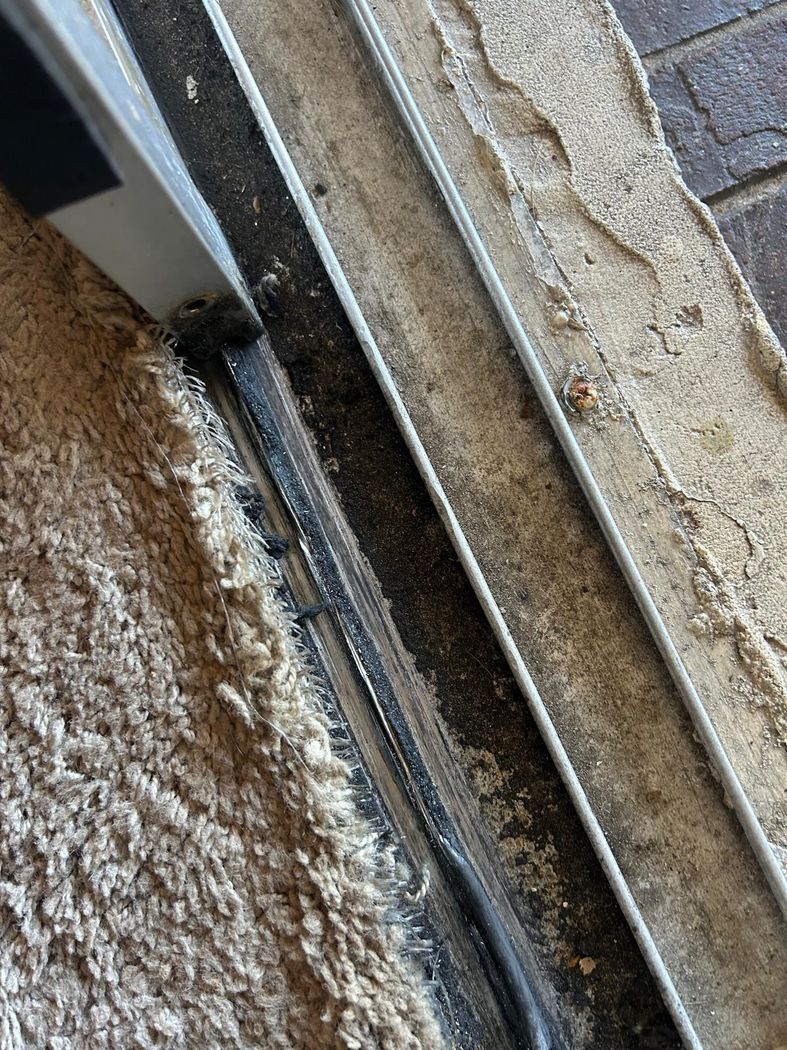
- That grit turns into grinding paste that wears rollers and track faster
- In Florida's sandy, coastal conditions this happens especially fast
What to use instead
Use a dry PTFE (Teflon) or silicone-based lubricant designed for door tracks. These leave a slick, dry film that repels dirt rather than collecting it. Apply a thin amount to a clean track — a little goes a long way.
Also avoid grease, cooking oil, and petroleum jelly for the same reason. And don't over-apply even the right product — excess just catches grit.
The right sequence: clean, then lubricate
- Vacuum and wipe the track clean and dry
- Clear the weep holes
- Apply a light film of dry PTFE or silicone lubricant
- Slide the door a few times to distribute it
If the door still drags after a proper clean-and-lube, the rollers or track are worn — see our track guide.
Frequently asked questions
What is the best lubricant for a sliding glass door?
A dry PTFE (Teflon) or silicone-based lubricant made for door hardware. It lubricates without attracting the sand and grit that oil-based products collect.
Why did WD-40 make my door worse over time?
Its residue collected sand and dust, forming an abrasive paste that wore the rollers and track. Cleaning it off and switching to a dry lubricant helps.
Need this fixed in Jacksonville or nearby Northeast Florida? We offer free quotes and same-day service.
Call 904-990-9520