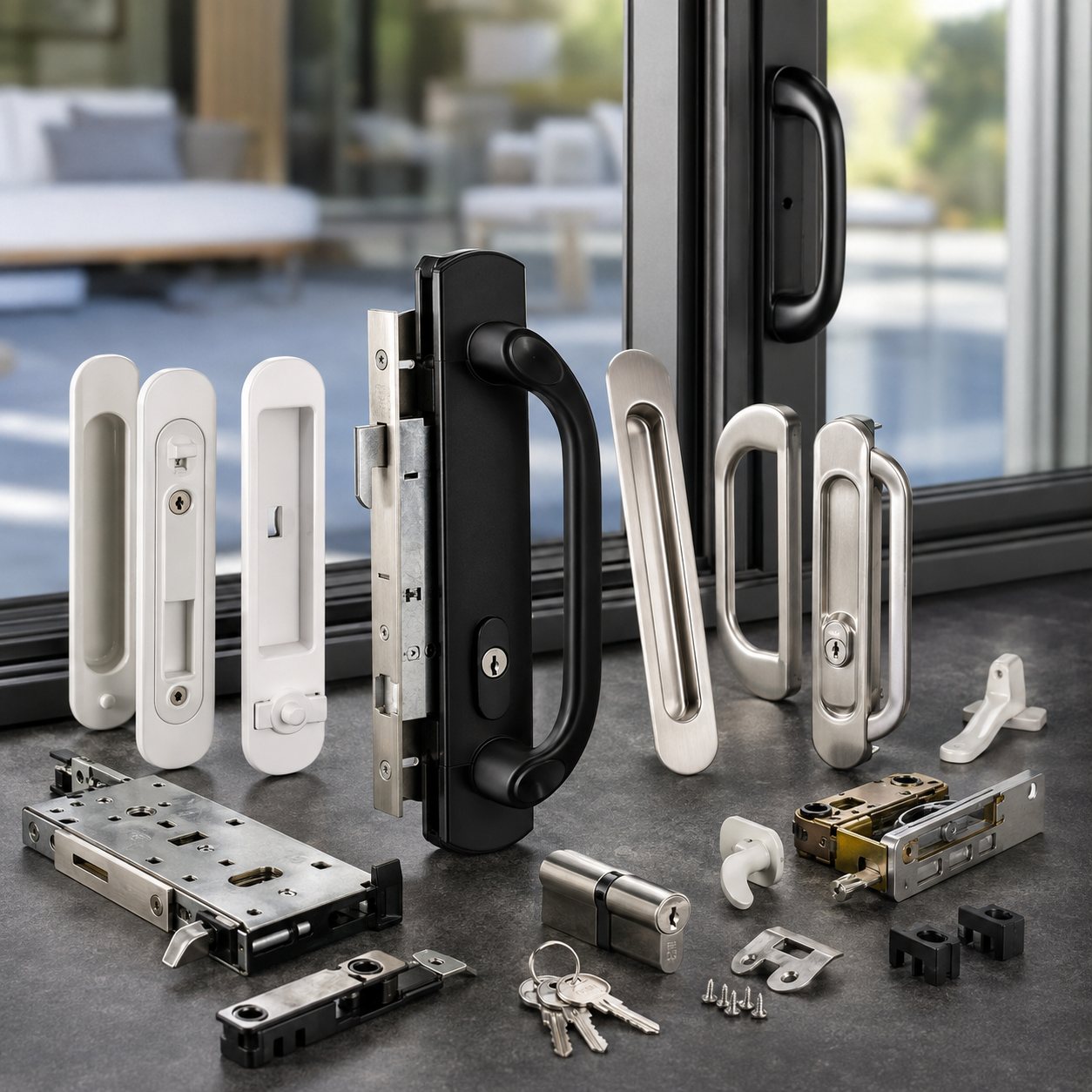
To make a sliding glass door more secure, start with a working primary mortise lock, then add layers: an auxiliary foot lock or pin lock, an anti-lift device or screws in the top track so the panel can't be lifted off, a bar or rod in the track as a physical block, and optionally security film on the glass. No single measure is enough — layering them is what deters forced entry.
Start with the basics
A sliding door can't be secure if the main lock doesn't work or the door is misaligned. Fix those first — a solid mortise lock that latches properly is the foundation. See why won't my sliding door lock?
Layered upgrades that work
- Auxiliary foot lock or pin lock — secures the door independently of the main latch
- Anti-lift device or screws in the top track — stops the panel from being lifted out
- A track bar or rod (or a cut dowel) — a simple physical block against sliding
- Upgraded mortise lock with a stronger hook bolt
- Security/safety film on the glass — slows a break-in attempt
- A door sensor tied to your alarm or a visible camera as a deterrent
Why the top track matters
A classic vulnerability is lifting the panel up and out of the bottom track. Anti-lift screws or a device in the head track close that gap so the door can't be lifted, which is one of the highest-value upgrades for the cost.
Get it set up right
We can assess your door and install the right combination of locks and anti-lift hardware for your situation. See our lock and security guide for the full picture.